Check Availability
CHILDREN (AGES 0 - 12)
0
You need to select a city first
There’s a reason more travelers are quietly rethinking where they go in Mexico.
Not everyone is looking for nightlife, crowds, or packed resorts anymore. More and more, people want something simpler. Slower. A place where you can actually relax without thinking about it.
That’s exactly what Loreto offers.
Set along the eastern coast of Baja California Sur, facing the Sea of Cortez, Loreto feels completely different from Mexico’s better-known beach destinations. It’s smaller, calmer, and deeply connected to nature, where daily life revolves around the ocean, not the noise.
And right now, that difference matters more than ever.
Most travelers think of Mexico as a single destination. But Mexico is enormous and wildly varied, and the Baja Peninsula operates almost like a different country from the mainland. Separated from the continent by the Sea of Cortez, this narrow stretch of desert-meets-ocean has developed its own rhythm over centuries, defined by small fishing communities, whale watching, ancient cave paintings, and a food culture shaped by the day's catch.
Baja California Sur, the southern half of the peninsula where Loreto sits, has a character that's entirely its own. Quieter, more remote, less touched by the kind of development that transformed other parts of Mexico's coastline. Travelers who know it tend to come back. Those who don't know it yet are usually surprised by how different it feels from anywhere else they've been in the country.
That difference isn't accidental. It's the result of geography, of history, and of a region that never chased the kind of growth that would have changed it beyond recognition.
Loreto has roughly 20,000 residents. That's it. It's the kind of town where the same family runs the taco stand their grandparents opened, where your hotel knows your name after the first morning, and where the biggest venue in town is a 17th-century Jesuit mission that still holds Sunday mass.
This is not, and has never tried to be, a party destination. No strip malls, no sprawling hotel corridors lined with chain restaurants, no all-inclusive mega-resorts turning the coast into an obstacle course. Loreto grew slowly and intentionally, largely because the fishing was extraordinary and the diving was world-class, not because someone decided to build a resort town from scratch.
The result is a coastal community where tourism and local life have found a genuine balance.
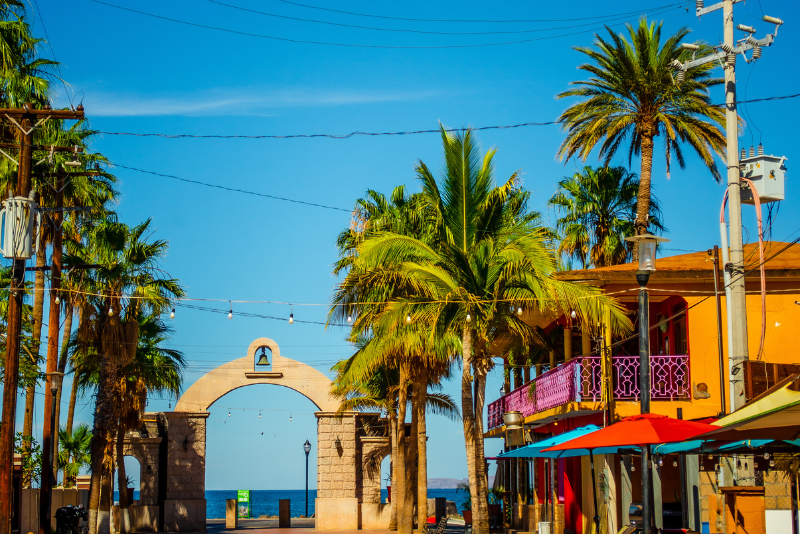
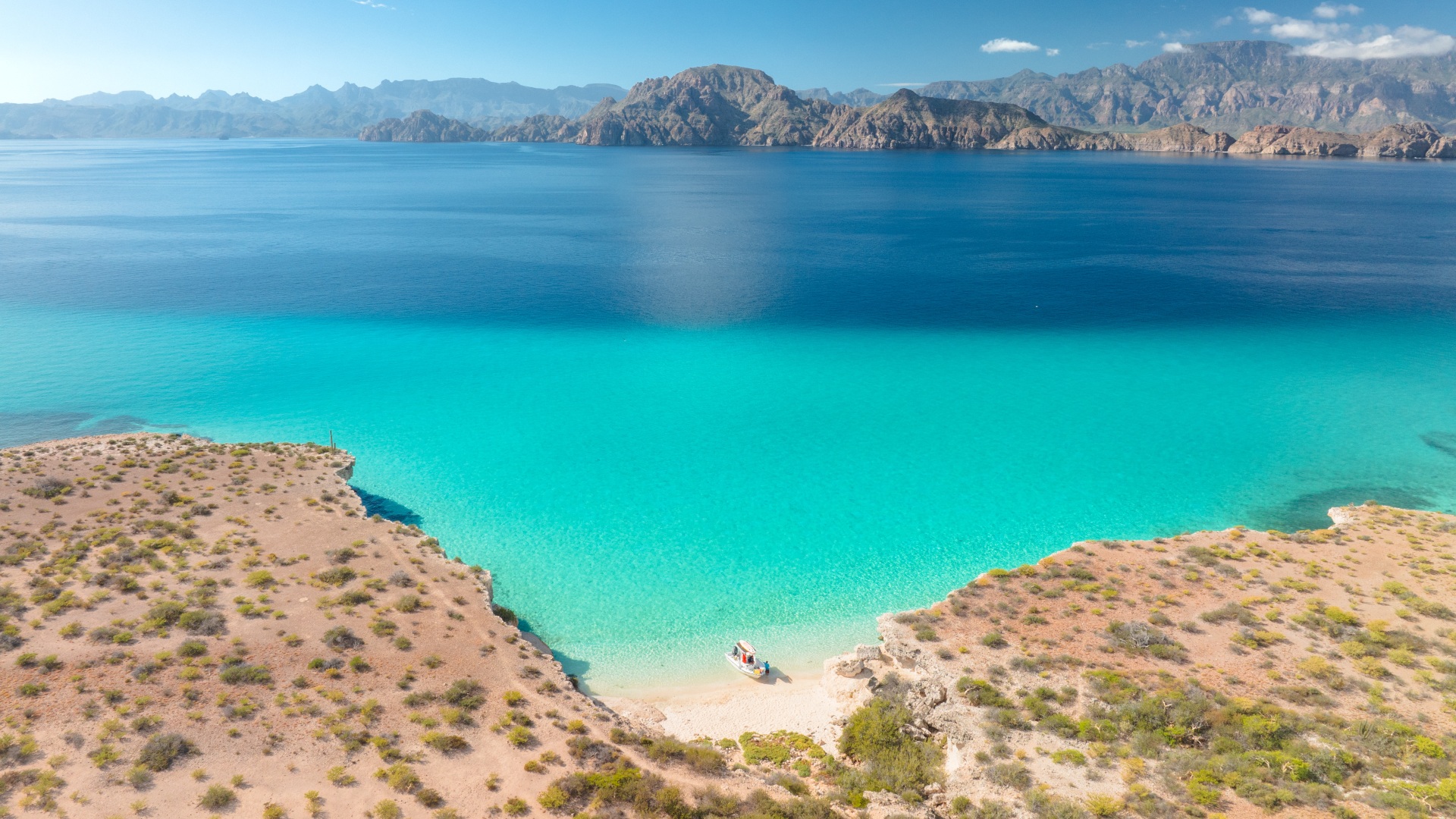
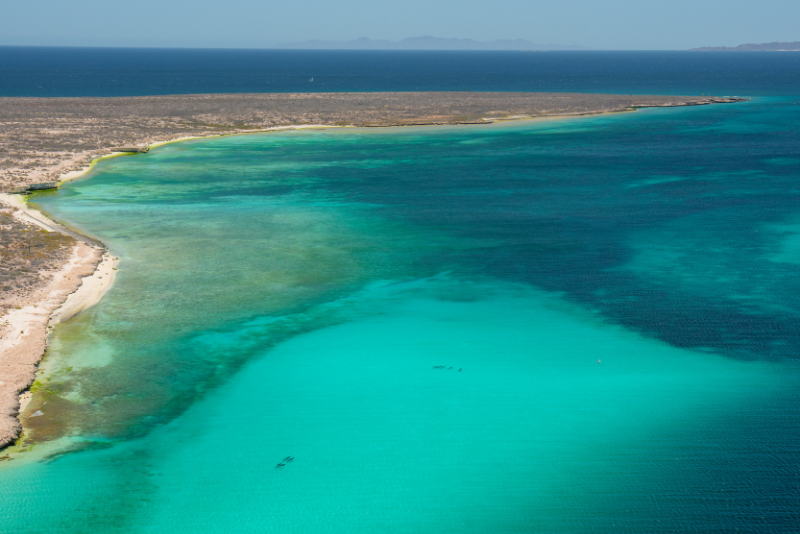
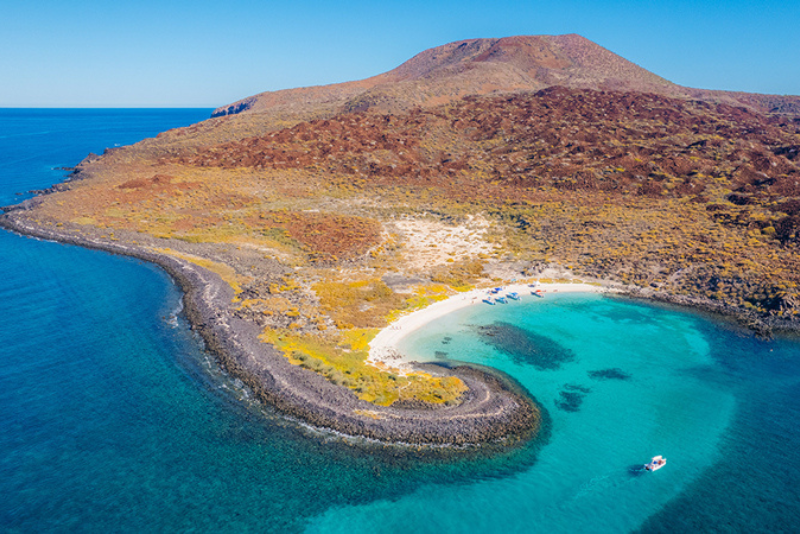
Here's the thing about Loreto that nobody who visits ever forgets: the water. The Sea of Cortez in this stretch, specifically around the five islands of the Loreto Bay National Marine Park, is something you have to see to believe. Blue-green and impossibly clear, warm enough to swim year-round, and full of life that seems entirely unbothered by the presence of humans.
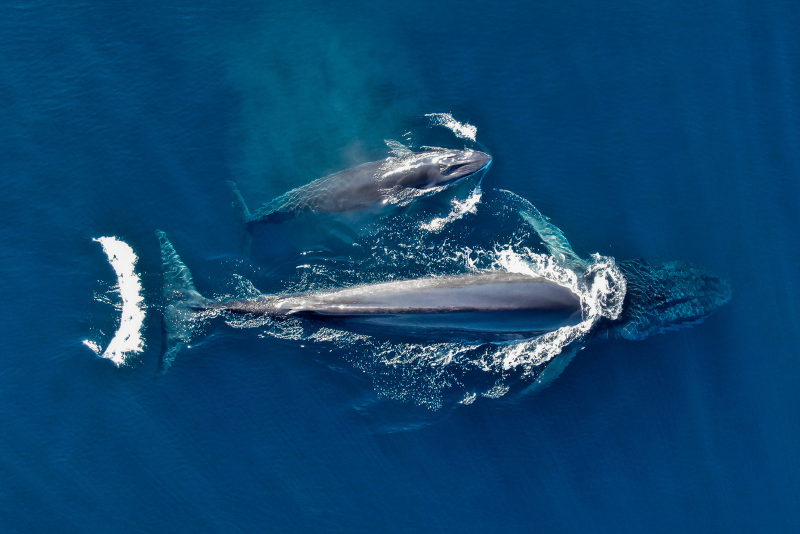
Sea lions will swim circles around you while you snorkel, seemingly curious and completely at ease. Dolphins appear off the bow of pangas so reliably that captains barely mention it. Blue and gray whales migrate through these waters every winter, and the experience of sitting in a small boat while a forty-ton whale lifts her calf toward you out of pure curiosity is the kind of thing you describe to people for the rest of your life.
The marine park protects the entire stretch of islands facing Loreto, which means the diving and snorkeling here exist in a pristine state that's increasingly rare anywhere in the world. Sport fishing is world-class: yellowtail, dorado, marlin, roosterfish. And the fishing culture here goes deep. These aren't casual charter operations. Loreto's captains have been reading these waters for generations.
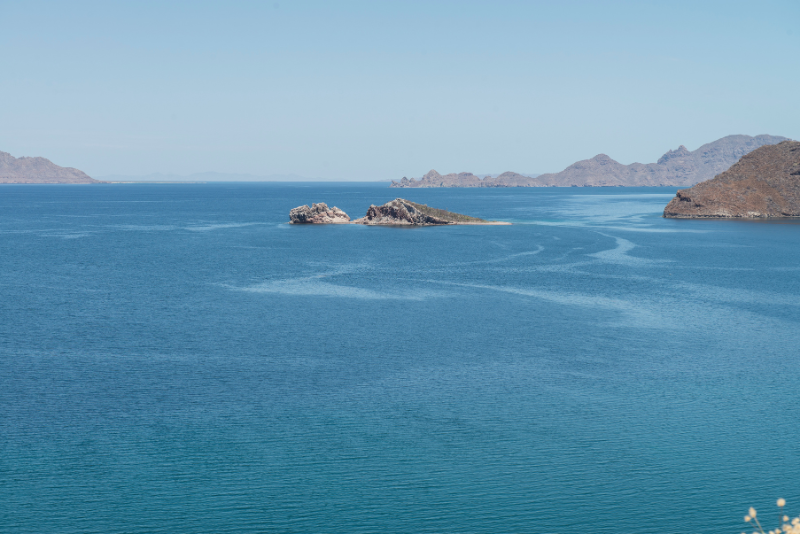
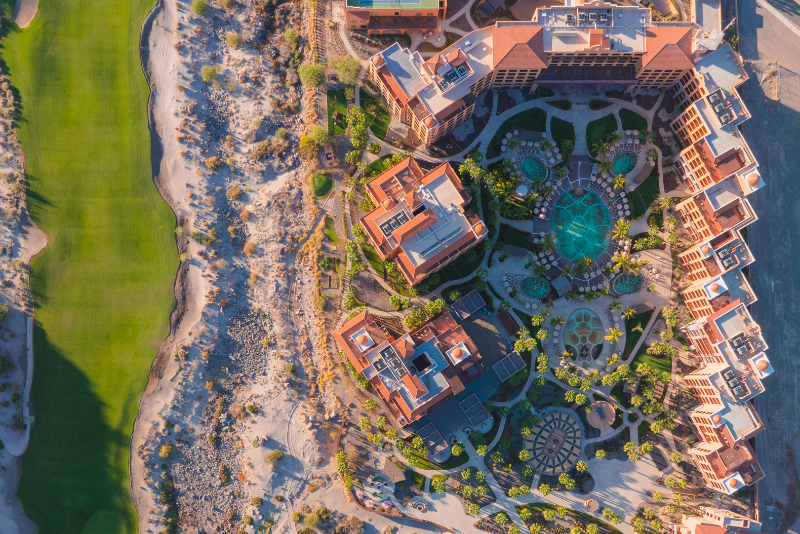
Villa del Palmar at the Islands of Loreto sits at Danzante Bay, about 42 kilometers south of town, tucked between the Sierra de la Giganta mountains and the Sea of Cortez. The resort was designed to exist within the landscape rather than in spite of it, and that choice shows up in everything from the architecture to the details you notice on your first morning.
Full-service and genuinely luxurious: a world-class spa, multiple restaurants serving Baja-inflected cuisine rooted in fresh, local ingredients, and a Rees Jones-designed golf course at TPC Danzante Bay that runs along a desert arroyo with mountain and sea views competing for your attention on every hole. None of it feels like a performance. The scale is right. The quiet is real.
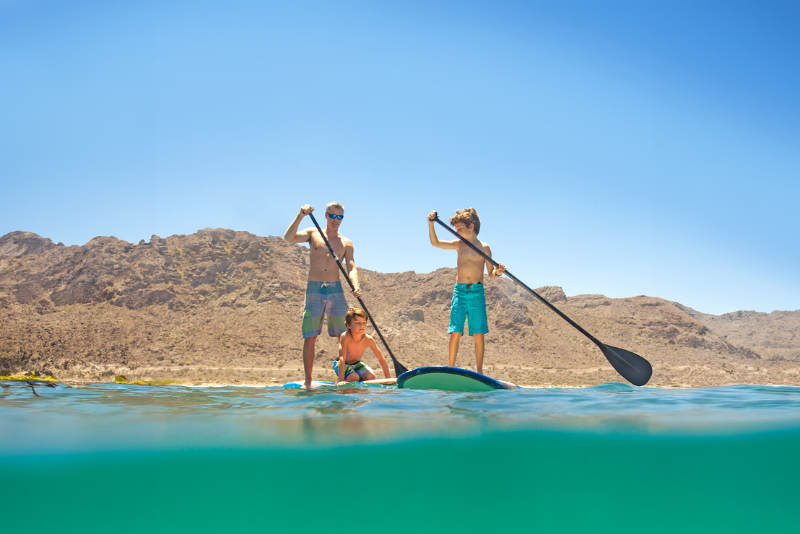
And then there’s everything just beyond your room: protected marine park waters where you can snorkel, dive, paddle, or kayak; guided island excursions to places like Coronado, Danzante and Carmen, where there are no roads, no crowds, and no development; and some of the most rewarding sportfishing in the region, all easily arranged through the resort. Even the spa draws from its surroundings, with treatments inspired by desert botanicals and the rhythms of the sea.
What you notice most, though, isn’t any one experience. It’s the absence of noise—no traffic, no crowds, no pressure to do anything at all unless you want to.
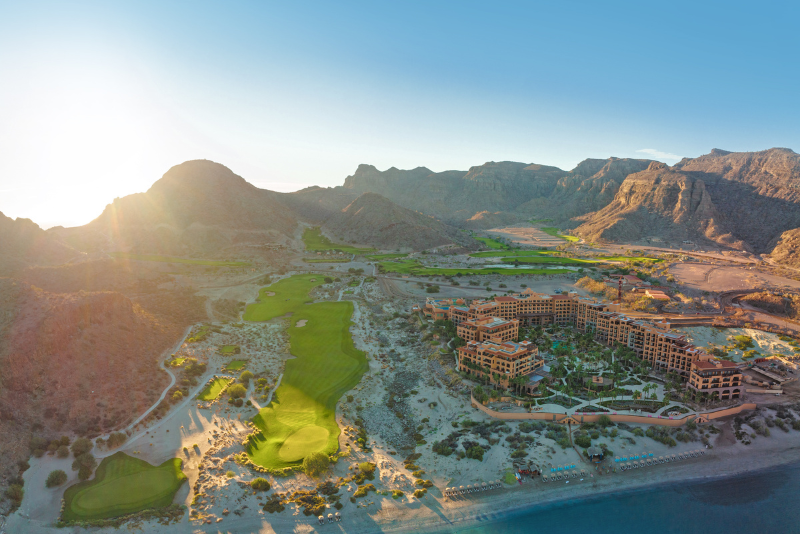
A morning in Loreto might start with coffee on a terrace while the light comes up over the islands, Danzante and Carmen sitting out there in the water like they've always been waiting. You might follow it with a round at TPC Danzante Bay before the sun gets high, or take a panga out to snorkel the marine park before the afternoon wind picks up. Lunch is fresh-caught fish somewhere with a view.
The afternoon slows down on its own. The beach. The pool. A spa treatment. The kind of nap that only happens when there's nothing pulling you back.
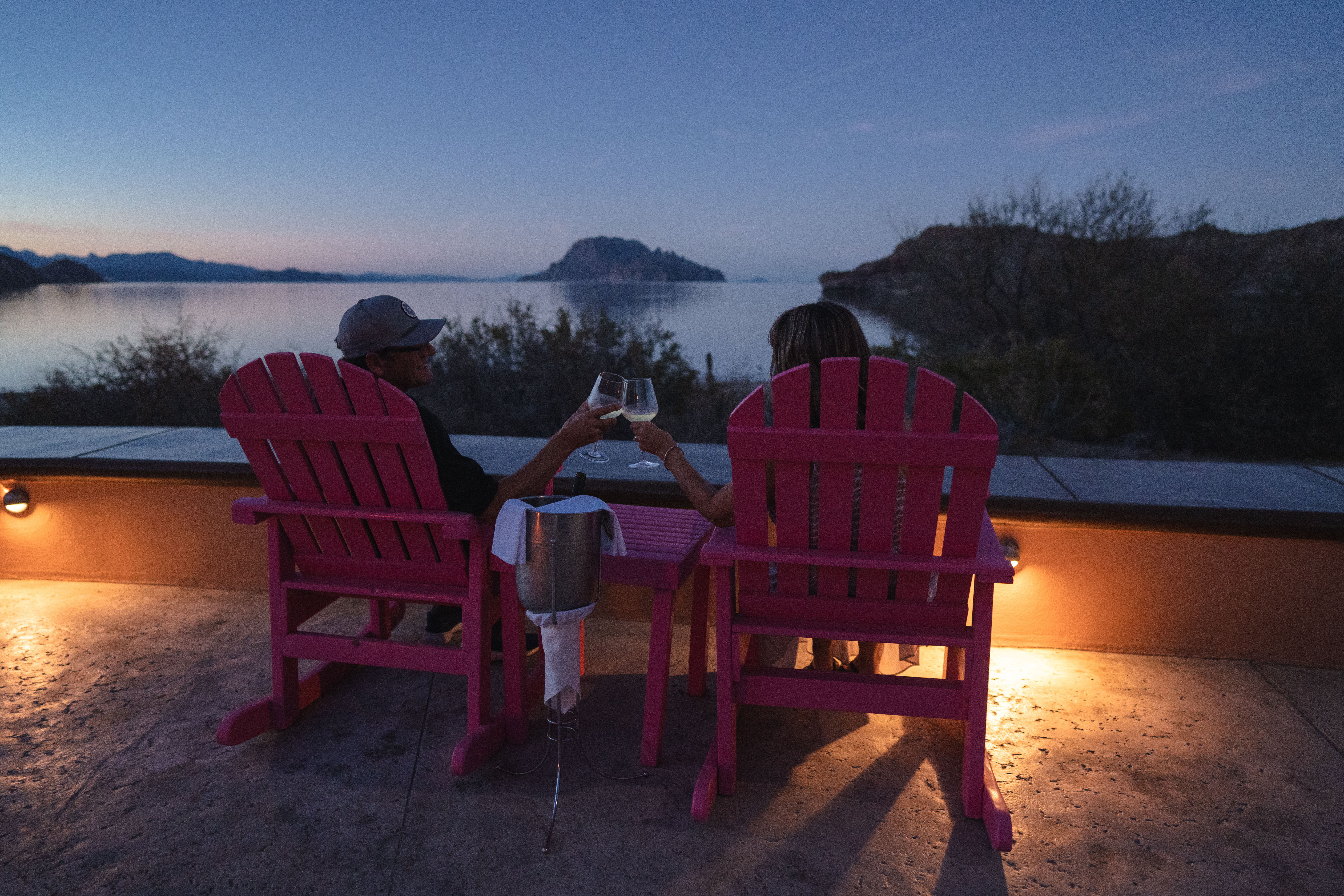
Evening on the malecón, if you venture into town, is one of those experiences that requires no curation. Locals out for a walk. Fishermen coming in. A taco stand that's been in the same spot for thirty years, run by the same family. The sunset here takes its time. You should too.

Not many places can offer a direct flight from Los Angeles and still feel like the world hasn't caught up with them yet. Loreto is one of them. There are also flights from Phoenix, Dallas, San Francisco, Tijuana, and Calgary — the infrastructure is real. But the town hasn't been shaped by mass tourism. The beaten path never really came here.
That means something specific when you land. The airport is small and relaxed. The drive to the resort passes through desert and sea with no billboards. The first full breath of salt air when you step outside has the quality of something that's been waiting.
More and more, the travelers who end up in Loreto are people who've quietly shifted what they're looking for. Simplicity over excess, nature over nightlife, space over crowds. Not as a compromise. As a preference. And Loreto doesn't just accommodate that instinct; it validates it completely.
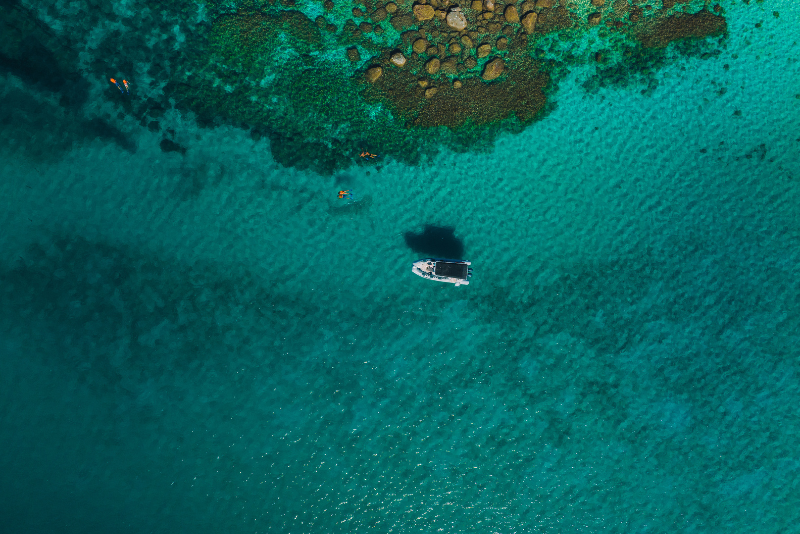
Getting here: Direct flights to Loreto International Airport (LTO) are available from Los Angeles and San Francisco via Alaska Airlines, Phoenix and Dallas via American Airlines, Tijuana via Volaris, and Calgary via WestJet. The airport is small and calm — easy arrivals, easy departures.
Best time to visit: October through May is the sweet spot for most travelers. Winter brings whale sightings. Spring offers exceptional fishing and diving. The summer months are hot but quiet, a local secret for those who don't mind the heat and prefer even more solitude.
What to expect: Baja California Sur runs on a mix of pesos and dollars, and card acceptance has expanded significantly. The resort handles everything in-house, but if you want to wander into town, the malecón, the mission, and the local taco spots are all worth your time.
Loreto is the kind of place that's hard to explain until you've been there. And once you have, you'll understand why so many people keep coming back.

Is Loreto, Mexico safe to visit right now? Yes. Baja California Sur, where Loreto is located, is one of the most visitor-friendly regions in Mexico. Loreto itself is a small, tight-knit coastal town where tourism is the economic heartbeat, and the community is deeply committed to the safety and comfort of every visitor.
Is Baja California Sur different from Baja California? Yes, they’re two separate Mexican states. Baja California (Norte) is the northern part of the peninsula, bordering the U.S. and including cities like Tijuana and Ensenada. Baja California Sur is the southern half, where you’ll find destinations like Loreto, La Paz, and Los Cabos. They have distinct landscapes, atmospheres, and travel experiences, and are hundreds of miles apart.
What makes Loreto different from Cancun or Puerto Vallarta? Scale and character. Loreto is a small fishing and mission town of about 20,000 people that never went through a mass-tourism transformation. No hotel strips, no nightclub zones. Instead you get a UNESCO-recognized marine park, five uninhabited islands, world-class sport fishing, genuine local culture, and a luxury resort that feels like it belongs to the landscape.
What's the difference between Loreto and Cabo San Lucas? Cabo is more developed, energetic, and built around nightlife and large all-inclusive resorts. It’s a great fit for a certain kind of trip. Loreto is something else entirely—quieter, more nature-focused, and largely untouched by the infrastructure that transformed Cabo. Both are in Baja California Sur, but they appeal to completely different travel styles.
How do I get to Loreto from the U.S.? Loreto International Airport (LTO) receives direct flights from Los Angeles, San Francisco, Phoenix, and Dallas. Travelers from San Diego can also use the Cross Border Express into Tijuana and connect from there. From LA and Phoenix it's under two hours. Villa del Palmar is about 30 minutes from the airport and can arrange private transfers.
What is the best time of year to visit Loreto? October through May is ideal for most travelers: warm days, calm seas, comfortable evenings. January through March brings blue whale season to the waters of Loreto Bay, one of the most remarkable wildlife experiences in the world. Spring and early fall offer exceptional diving and fishing. Summer is when the resort is at its quietest, a legitimate secret for those who want Loreto almost entirely to themselves.
What does Villa del Palmar at the Islands of Loreto offer? Spacious suites, Sábila Spa, multiple restaurants, the Rees Jones-designed TPC Danzante Bay golf course, a pool, fitness facilities, and a full range of water sports and guided excursions. The team can arrange sport fishing, island snorkeling, whale watching, kayaking, hiking, and cultural tours of historic Loreto town.
Is Loreto good for families? It's exceptional for families. The marine park is ideal for introducing kids to snorkeling in safe, protected waters. Whale watching is a life-changing experience at any age. The resort has pools, beach access, and activities for all energy levels, and the town itself is walkable, calm, and genuinely enriching for kids who are used to more manicured resort experiences.




Subscribe to our newsletter and receive special offers and exclusive Resort news by Email, SMS, or WhatsApp.


Resort Phone: +52 (613) 134 1000
USA/CAN Toll Free Number: 1 800 790 4187
Km. 84, Carretera Transpeninsular, Ensenada Blanca Loreto, 23880 Loreto, Baja California Sur, Mexico


Pegasus: 75285
Copyright © 2021 — All rights reserved